

Understanding Cloud Cost Management Strategies and Tools
This article explores cloud cost management strategies for enterprises and the tools needed to meaningfully reduce spend.
Cloud cost management is a critical discipline for modern enterprises. It involves monitoring, measuring, and optimizing cloud expenses to align with business objectives. Effective cloud cost management can lead to significant cost savings and improved financial predictability, but only when it's treated as an ongoing practice.
As organizations increasingly rely on cloud services, understanding cloud cost management becomes essential for CIOs, CISOs, and CFOs looking to strengthen financial governance. For CISOs specifically, that governance conversation extends beyond spend into how CNAPP platforms consolidate security posture management with the same visibility FinOps teams rely on for cost.
What Is Cloud Cost Management?
Cloud cost management is the practice of monitoring, analyzing, and controlling how much an organization spends on cloud resources, so spending stays aligned with business objectives. Since cloud usage and pricing change constantly, this requires a dynamic approach.
Cloud cost management begins with gaining visibility into cloud expenditures. Tracking spending patterns helps identify inefficiencies and opportunities for optimization.
Next, organizations need to set budgets and policies to measure spend against. These measures prevent overspending and ensure costs remain aligned with organizational goals.
Cost management is not only about reducing expenses. It's also focused on maximizing value from cloud investments and ensuring they support strategic business outcomes.
Key aspects of cloud cost management include understanding pricing models, discounts offered by cloud providers, and the effective use of reserved instances. Part of that picture involves understanding CapEx vs OpEx in cloud spending, since the financial model you choose shapes how costs show up on your books.
Benefits of Cloud Cost Management:
-
Significant cost savings and improved financial predictability
-
Enhanced collaboration between finance, operations, and engineering teams
-
Better alignment of cloud spending with business objectives
Ultimately, effective cloud cost management integrates these components into an ongoing, adaptive process. It requires continuous monitoring and adjustment as technologies and business needs evolve. This continuous refinement helps organizations remain agile and responsive in a competitive landscape.
Why Cloud Cost Management Matters for Modern Enterprises
Cloud cost management is crucial for enterprises in today's digital economy. As companies rely increasingly on cloud services, cost optimization becomes a strategic priority. Effective cloud cost management ensures that investments deliver maximum value.
Enterprises face the risk of overspending without proper cloud cost control. With diverse services and dynamic pricing models, costs can spiral unexpectedly, allowing unplanned expenditures to negatively impact profitability and strategic goals.
A well-defined cloud management approach helps align expenditures with business objectives. This supports financial predictability and strategic planning, providing enterprises with a competitive edge. Effective cloud cost management also contributes to digital transformation efforts.
Implementing sound cloud cost management practices involves several benefits, including:
-
Improved cost efficiency and budget compliance
-
Greater insights into spending patterns and trends
Ultimately, disciplined cloud cost management empowers organizations to make informed decisions that drive innovation and growth. By keeping cloud investments under control, enterprises are better positioned to thrive in an evolving technological landscape.
Key Principles of Effective Cloud Cost Control
Cloud cost control best practices start with transparency. Visibility into cloud usage patterns is foundational for managing expenses effectively. It helps identify areas for optimization and potential wastage.
Another principle is proactive budgeting. Setting clear budgets and integrating them into operational workflows prevents unexpected expenses. This can be complemented by using alerts to notify teams of potential overruns.
Cost allocation is equally important. Properly tagging and attributing cloud expenses ensures accountability. This process uncovers inefficiencies and aligns spending with business objectives.
Automation plays a critical role in cost control. Automatic scaling and resource scheduling optimize utilization based on demand. This minimizes idle resources and maximizes cost efficiency.
Key strategies for effective cloud cost control include:
-
Implementing spend alerts and budget thresholds
-
Enabling detailed tagging for cost allocation
-
Automating scaling and resource management
Finally, fostering a culture of cost awareness across teams is crucial. Training and involving teams in cost management processes encourage responsible consumption. When everyone understands the financial impacts of cloud use, organizations are better positioned to achieve cost control. Cloud cost control, therefore, becomes not just an IT task, but a shared responsibility.
Common Challenges in Cloud Cost Management
Cloud cost management presents various challenges for organizations. One major difficulty is the complexity of multi-cloud environments. Managing costs across different cloud providers, including Google Cloud, Microsoft Azure, AWS, and OCI requires tailored strategies for each provider.
Another major challenge is the unpredictable nature of cloud pricing. Cloud services often have variable costs based on usage, which complicates budgeting. It requires constant monitoring to avoid surprises.
Resource wastage is also a common issue. Organizations frequently over-provision resources, leading to unnecessary expenses. Effective rightsizing and regular audits are essential to tackle this problem.
Lastly, limited transparency often hinders cost management efforts. Understanding the nuances of billing across service providers can be daunting. This is especially true without the right tools and processes in place.
To overcome these challenges, organizations should focus on:
-
Consolidating cloud service billing visibility
-
Conducting regular audits to identify underused resources
-
Customizing cost strategies for multi-cloud use
To ensure effective cost management, teams need to be able to collaborate easily and effectively. This starts with helping different departments understand their impact on cloud spending. Bridging these gaps through better communication and shared objectives can streamline cost management efforts.
Ultimately, recognizing these challenges is the first step towards crafting effective solutions that align with business goals.
Core Strategies for Cloud Cost Reduction
Effective cloud cost reduction requires a multifaceted approach that involves aligning resource consumption with business needs. A key strategy is rightsizing: ensuring resources match actual usage.
Rightsizing not only avoids waste but also improves performance. This practice requires ongoing analysis and adjustment. Automation can significantly aid in this endeavor.
Leveraging reserved instances offers another path to savings. Providers like AWS and Azure offer discounts for longer commitments, which can lead to substantial cost benefits.
Additionally, auto-scaling helps adjust resources dynamically. This ensures scalability without overspending by aligning capacity with demand fluctuations.
Eliminating unused resources is essential for cost efficiency. Instances, storage, and licenses often linger. Regular audits can uncover and resolve these inefficiencies.
Lastly, consider optimizing storage solutions. Tiered storage helps balance cost with access speed. Start by selecting the right storage types for your enterprise's data usage patterns.
Adopting these cloud cost reduction strategies involves a few key actions:
-
Conduct regular usage reviews
-
Implement strict decommissioning policies
-
Set financial guardrails to monitor consumption against set budgets
Introducing a FinOps approach encourages holistic management. It improves collaboration across IT, finance, and engineering. Shared ownership ensures that cost reduction is a collective responsibility.
To succeed, organizations should focus on:
-
Establishing clear financial policies
-
Fostering a culture of cost accountability
Each strategy contributes to a comprehensive cloud cost management framework to enhance financial predictability and maximize value from cloud investments.

Building a FinOps Culture: Collaboration Across IT, Finance, and Business
Creating a FinOps culture is vital for cloud cost management.
FinOps, or Financial Operations, promotes a unified approach by combining the expertise of IT, finance, and business teams.
This cultural shift ensures better financial outcomes by creating a shared sense of accountability for managing cloud expenses. Transparency and collaboration lead to optimized spending.
A successful FinOps culture relies on several key practices:
-
Regular financial reviews involving cross-functional teams
-
Transparent communication of financial goals and metrics
-
Shared accountability for cloud budgeting decisions
Incorporating FinOps improves decision-making. Each department contributes valuable insights. This diversity of perspectives fosters innovative cost-saving strategies.
Training programs can bolster a FinOps mindset. Educating teams on cloud cost management drives efficiency. Individuals become more conscious of their impact on the bottom line.
Ultimately, FinOps bridges the gap between technical and financial objectives. That bridge is strongest when engineering treats cost as a delivery signal; see DevOps best practices for cloud teams. It paves the way for more strategic cloud investments. By uniting various stakeholders, organizations enhance their financial resilience.
Essential Tools for Cloud Cost Management
In the dynamic world of cloud services, the right enterprise cloud cost management tools are crucial to providing clarity and control over cloud spending. These tools simplify the complex task of cloud cost management.
Platforms such as AWS Cost Explorer or Azure Cost Management serve as allies. They offer insights into spending trends and potential savings. Cloud cost management tools transform data into actionable intelligence.
Key features often include automated reporting. This ensures stakeholders stay informed on cost and usage. Transparency paves the way for better financial decisions.
Not every tool is suitable for every organization. Each business has unique needs and challenges. Therefore, selecting the right tool requires understanding these specific requirements, including whether cost data needs to be unified across more than one cloud provider.
Most tools today integrate with other systems seamlessly. This enables a unified approach to cloud expense management. A single dashboard can provide a comprehensive view.
Here are some popular tools and their functionalities:
-
AWS Cost Explorer: Detailed reports on AWS spending
-
Azure Cost Management: In-depth analysis of Azure expenditures
-
Google Cloud's Billing Reports: Visualization of Google Cloud costs
-
Multi-cloud platforms like CoreStack FinOps+: Unify cost visibility, governance, and optimization across AWS, Azure, Google Cloud, and Oracle Cloud in a single platform, for organizations managing more than one provider.
Integrating these tools into your strategy can provide clarity, reduce waste, and help manage budgets effectively. The goal is to transform raw data into business value. These essential tools are more than just software; they are strategic enablers. They ensure organizations optimize their cloud investment and achieve desired business outcomes.
Automation and AI in Cloud Cost Optimization
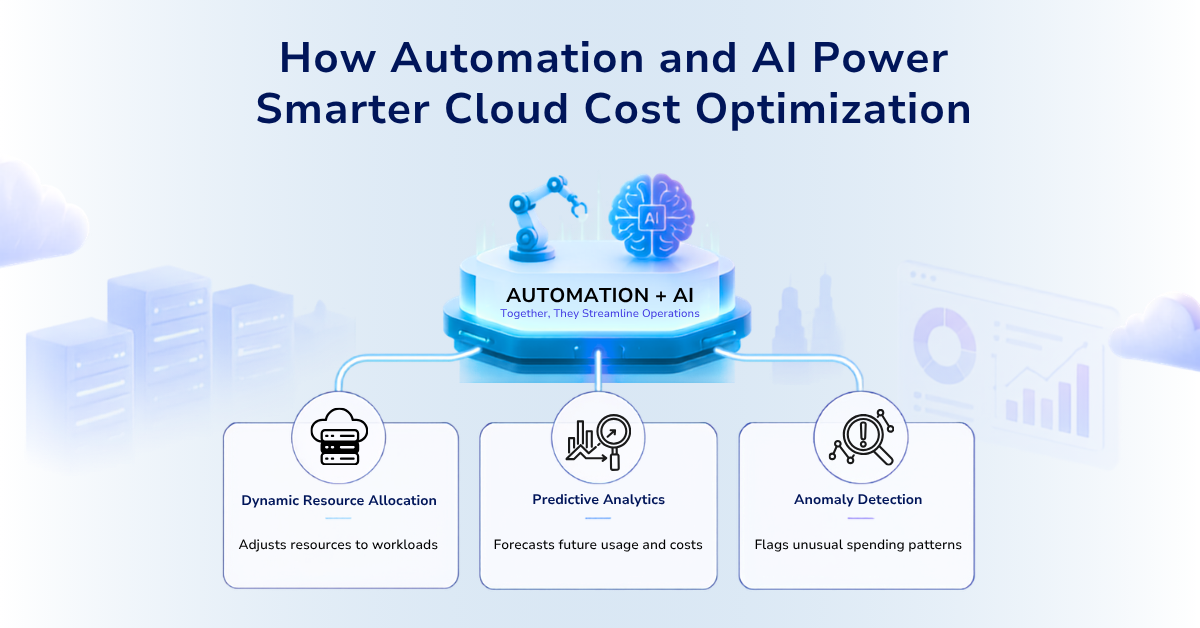
Automation plays a pivotal role in cloud cost optimization. Automated processes can adjust resources based on real-time demand. This minimizes waste and ensures cost efficiency.
AI technologies add another layer of intelligence. They enhance forecasting by analyzing usage patterns and predicting future demands. AI-driven insights support strategic decision-making.
Automation and AI together streamline operations by reducing manual effort and minimizing human error. Consequently, organizations can focus more on innovation.
Key benefits include:
-
Dynamic Resource Allocation: Automatically adjusts resources based on workloads.
-
Predictive Analytics: Provides insights on future usage and costs.
-
Anomaly Detection: Identifies unusual spending patterns quickly.
Incorporating these technologies into cloud strategies demands an initial investment. However, the long-term savings and increased efficiency offset initial costs. The future belongs to intelligent cloud operations. Organizations that leverage these technologies enhance their resilience and performance by ensuring their cloud expenditures align with business objectives and driving sustainable growth.
Governance, Policy, and Continuous Improvement
Effective governance is central to cloud cost management. Strong cloud governance and cost control practices set clear policies that guide cloud usage, ensuring that spending aligns with business objectives.
Continuous improvement is a dynamic process that requires regular reviews and updates to cloud policies. This adaptability helps in responding to evolving business needs.
Implementing robust governance involves several key actions:
-
Define Clear Policies: Establish rules for cloud usage and spending.
-
Regular Audits: Conduct audits to uncover inefficiencies and hidden costs.
-
Feedback Loops: Use feedback to refine strategies and policies.
Transparent reporting of cloud expenses aids in maintaining control and fostering a culture of accountability. Continuous feedback and audits promote an environment of ongoing optimization. Hence, organizations not only maintain control but also drive innovation and efficiency. They can effectively align their cloud investments with strategic goals, supporting growth and sustainability.
That same governance discipline extends into day-to-day operations and the data these systems produce and consume alike. CloudOps turns policy into automated, ongoing action across your cloud estate, while a strong data governance framework extends that same discipline to how you classify, protect, and use the data flowing through it.
Measuring Success: KPIs and Business Outcomes
In cloud cost management, success is gauged by more than savings. Key Performance Indicators (KPIs) help in evaluating effectiveness by offering measurable insights into cost management strategies.
Relevant KPIs include cost per user, spend per month, and cost per tenant. These indicators shine a light on how well resources align with demand. They also measure how efficiently cloud services support organizational goals.
Understanding these KPIs aids in connecting cost management efforts to business outcomes. This clarity facilitates better decisions. It also enhances the transparency needed for stakeholder confidence.
Here are some essential KPIs to monitor:
-
Cloud Spend vs. Budget: Tracks whether spending aligns with planned budgets.
-
Cost per Transaction: Measures expenses per cloud service transaction or usage.
-
Usage Efficiency: Assesses how well resources are utilized relative to consumption.
Efficient tracking and analysis of KPIs empower organizations to tie cloud investments directly to strategic objectives. This alignment fosters not only financial prudence but also robust business growth and resilience.
Conclusion: The Future of Cloud Cost Management
As cloud adoption grows, so does the complexity of managing costs effectively. Organizations will increasingly rely on AI and automation for cost management. These technologies enhance precision and provide real-time insights. They also reduce manual effort and promote proactive cost control.
As cloud strategies advance, aligning them with business goals remains paramount. Successful cloud cost management will be integral to achieving digital resilience. It will support not only financial health but also drive innovation and competitive advantage.
How CoreStack Supports Enterprise Cloud Cost Management
Every strategy covered in this guide, from rightsizing to KPI tracking, depends on having unified visibility and governance across cloud providers. CoreStack FinOps+ is built specifically for this: it delivers real-time cost visibility, AI-powered anomaly detection, automated forecasting, and policy-driven governance across AWS, Azure, Google Cloud, and Oracle Cloud from a single platform. Its FOCUS-compliant reporting standardizes multi-cloud cost data so finance, IT, and cloud teams can work from the same numbers, while built-in chargeback, showback, and tagging governance turn the KPI and accountability practices described above into an operational reality.
Ready to put these cloud cost management strategies into practice across your entire cloud estate? Request a demo to see how CoreStack FinOps+ can unify cost visibility, governance, and optimization for your organization.
Frequently Asked Questions
What is cloud cost management?
Cloud cost management is the practice of monitoring, analyzing, and optimizing how much an organization spends on cloud resources, so that spending stays aligned with business goals.
What is the difference between cloud cost management and cloud cost optimization?
Cloud cost management is the overall practice of tracking and controlling cloud spend. Cloud cost optimization refers to the specific actions taken within that practice, such as rightsizing, reserved instances, and auto-scaling, to reduce waste and lower costs.
What are the best strategies for cloud cost reduction?
The most effective cloud cost reduction strategies include rightsizing resources, using reserved or spot instances, automating scaling, eliminating unused resources, and adopting a FinOps approach that shares cost accountability across teams.
How is cloud cost management different from FinOps?
Cloud cost management refers to the practices and tools used to track and control cloud spend. FinOps is the broader organizational discipline that brings finance, engineering, and business teams together around shared cost accountability, and cloud cost management is one of the core practices FinOps relies on.


